
Engineering and industrial projects are becoming increasingly complex. Traditional tools and disconnected workflows are no longer sufficient to manage the scale, speed, and accuracy required in modern projects. As a result, digital engineering platforms are emerging as a new foundation for how engineering teams design, plan, estimate, and deliver projects.
This article explains what a digital engineering platform is, why it matters, and how it is transforming modern industrial and engineering workflows.
Historically, engineering projects have relied on multiple disconnected systems:
These fragmented workflows create:
As projects grow in size and complexity, these limitations become increasingly costly and risky.
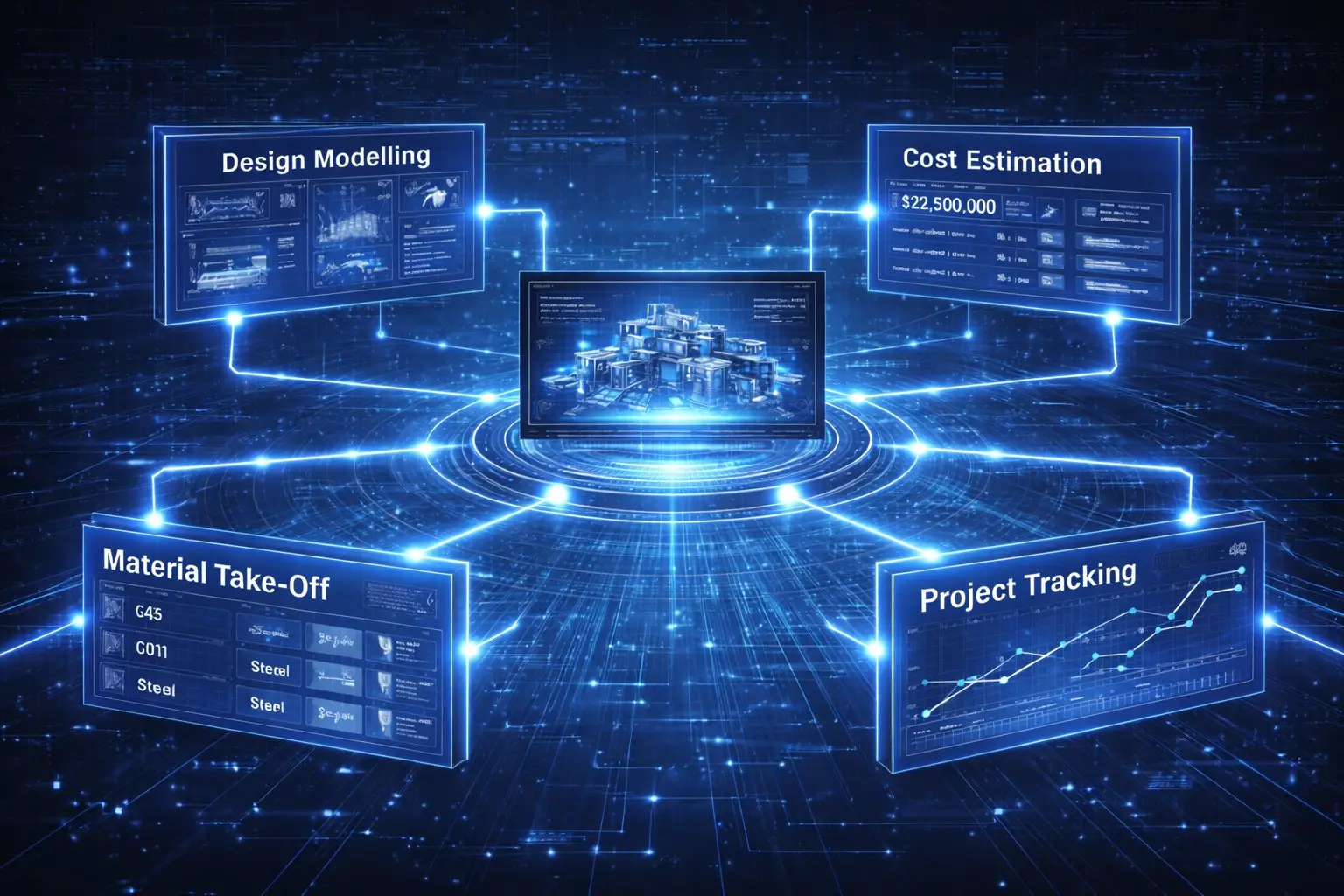
A digital engineering platform is an integrated software environment that connects multiple engineering functions into a single system. Instead of using separate tools for design, modelling, material take-offs, costing, and reporting, these functions operate within a unified digital framework.
Key characteristics include:
The platform becomes a single source of truth for engineering projects.
Digital engineering platforms typically support:
Creating and managing digital models of systems, plants, and infrastructure.
Centralised storage and control of engineering data.
Automated processes for extraction, calculation, and validation of project data.
Automated extraction of quantities and materials from digital models.
Data-driven cost calculations based on model and material data.
Linking engineering, estimation, planning, and reporting processes.
Digital engineering platforms change how teams work:
This leads to improved efficiency, reduced risk, and better project outcomes.
Digital engineering platforms are part of a broader transformation across industrial sectors. Companies are moving away from fragmented toolchains and manual workflows toward integrated digital systems that support:
This shift is redefining how modern engineering projects are designed and delivered.
PlantFCE represents this digital engineering approach by integrating modelling, material take-offs, cost estimation, and project workflows into a single platform. Rather than treating these as separate activities, PlantFCE connects them into a structured digital environment that supports engineering projects from early design through to planning and costing.
This integrated approach reflects the core principles of digital engineering platforms.
Digital engineering platforms are not just new software tools — they represent a fundamental shift in how engineering projects are structured and delivered. By integrating workflows, centralising data, and automating processes, they enable teams to work more efficiently, reduce risk, and make better-informed decisions.
As engineering and industrial projects continue to grow in complexity, digital engineering platforms will become essential infrastructure for modern project delivery.